
There are guitar players whose sound is derivative in a way you can pick up on immediately. It doesn’t mean they don’t have their own thing or that they’re not as good as the players who came before, but you know when you hear it that the influences are right there at the surface. Truth be told, the vast majority of guitar players across genres fall into this category. Their style came from somewhere, or in numerous cases came from many different somewheres, blended together.
And then there are the guitar players who flip the whole art form on its head. The ones who break ground, who push buttons, who take the instrument and beat it senseless until something totally original comes out. Bob Mould is one of those players.
His influence is far reaching, his playing is peerless, and his tone is brutal even when it’s cleaner. From the early 80s through the present day, from Husker Du to Sugar to his solo work, Mould has done what few guitar players have been able to accomplish: Strangle the instrument just enough to make it both the rhythmic core and the star of the show. Many have copped the most compelling parts of Mould’s playing, and while it’s always a high compliment to lift a guitar player’s shapes, voicings, or tone, there’s just nothing like the real thing.
And so today, we’re going to dive into everything Bob Mould. We’ll explore his own influences, dive into the three distinctive eras of his career from the perspective of the guitar as the core of all the music, and examine his influence on a generation of players that came after him. That’s a good idea, we think.
And with that, let's tackle some Bob Mould head on.

Bob Mould was born in 1960 in upstate New York, where he grew up in a town near the U.S./Canada border close to Quebec. One of the most formative moments musically for Mould was seeing the Ramones open for Iggy Pop at a theater at the University of Montreal. He recalled in an interview with the CBC that the show is what made him realize music was the path for him.
“I said, 'OK, this is it. This is the kind of music,'” he said. “Aerosmith, Kiss, Foghat, Fleetwood Mac, whatever — all of that is really good, but I'm going to go in this direction.'”
The Ramones would become a key influence on Mould’s musical upbringing, remarking in an NPR interview that the panning and sonic placement of the first Ramones record was “instructional.”
“I could get close to the bass guitar, hear the drums and vocals, and I could play guitar to that. Or I could go over and listen to the guitar, and learn that constant downstroke, power- chord style that Johnny Ramone came up with,” he said.
Other influences that formed Mould’s approach to the guitar in his formative years included Pete Townshend, who helped him learn how to fill space with a guitar using drone notes in open chords. He was also heavily influenced by The Byrds and Pink Flloyd, influences he would bring significantly to albums like Husker Du’s Zen Arcade.
In 1979, Mould formed Husker Du with Grant Hart and Greg Norton, and quickly began forming his playing style and cementing himself as an unparalleled player and songwriter. By the time of the band’s debut studio album Everything Falls Apart in 1983, they’d already been crafting their searing approach to punk rock for a few years to growing acclaim. But it was 84’s Zen Arcade that really laid the groundwork for how influential Mould would become as a guitar player.
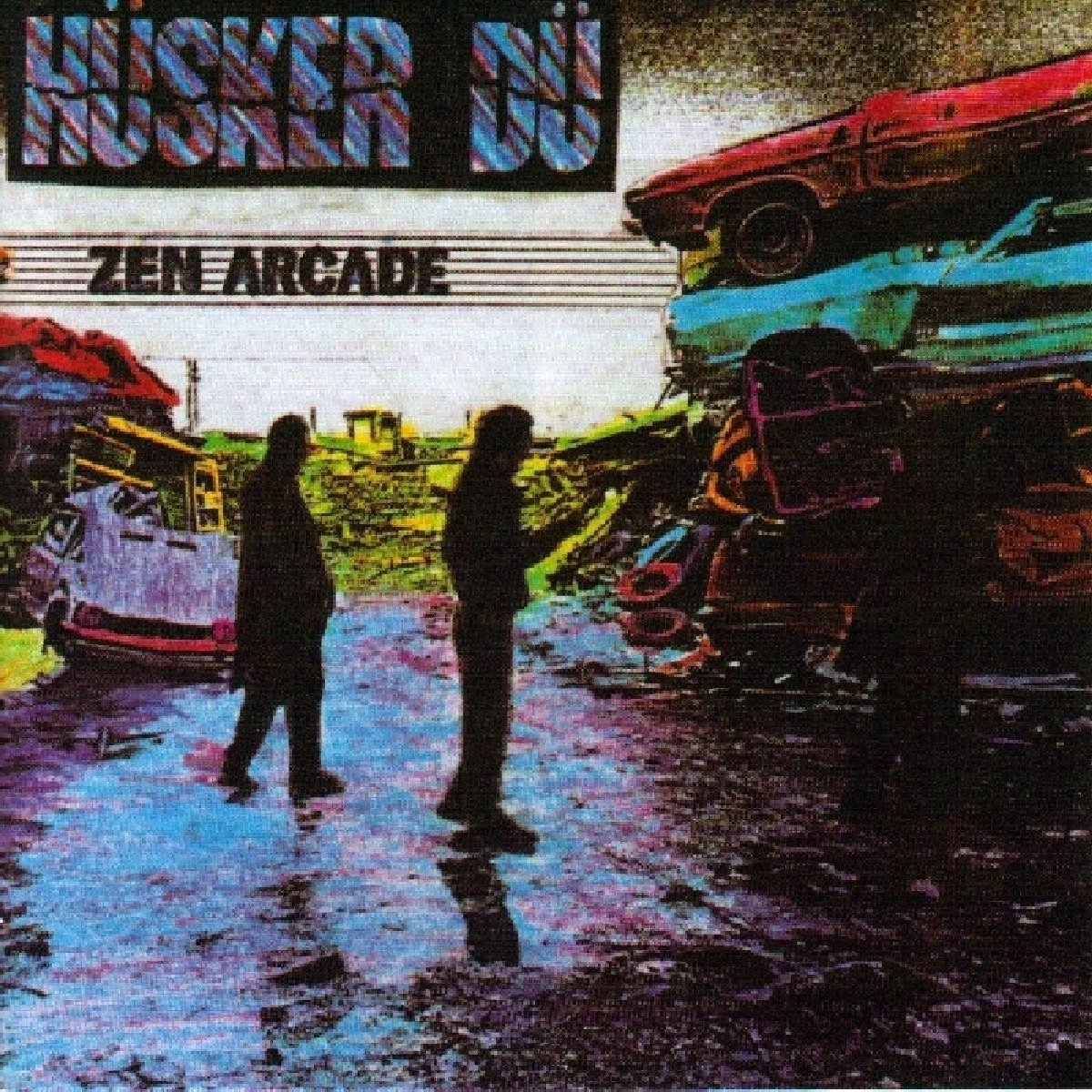
A potent mix of hardcore punk, psychedelia, and what would now be considered melodic post-hardcore, Zen Arcade wasn’t a slick or pretty sounding record. It was sharp and bombastic and leaned hard on those aforementioned droning guitar notes to fill space with intensity and delirium. There’s perhaps no better example of this on the record than the opener, “Something I Learned Today.”
Andy Cairns of the Irish band Therapy once summed it up perfectly: “The first time [I] heard it [I] thought it sounded like The Byrds with a fuzzbox,” he said.
Zen Arcade led to 1985’s New Day Rising—followed up quickly by Flip Your Wig the same year. Flip was the band’s first self-produced album, and a sharp turn away from a prominently fast hardcore-centric sound towards something more melodic and sonically bigger. Flip would be the band’s last for their longtime label SST, garnering the kind of attention it took for the band to land a major label deal and ultimately release Candy Apple Grey on Warner Bros in 1986.
That album featured more acoustic guitar and a subdued approach compared to previous release, and would lead to their final release Warehouse: Songs and Stories in 1987. Warehouse was a record that saw more tension between Mould and Grant Hart as they competed for songwriting space, and it also found the band maturing compositionally in ways that alienated some.
The guitars he used through the Husker Du era were famously Ibanez Rocket Roll Jr. models, Ibanez’s lawsuit-era copy of the Flying V that are, today, rare and highly sought after. It was a guitar that Mould first saw Sylvain Sylvain of the New York Dolls play and he knew he had to get one. That guitar would become synonymous with the Husker Du sound and aesthetic, while his amp setup evolved more regularly over time from a Yamaha G100 solid state head paired with a silverface fender twin, to a stereo setup, to a silverface deluxe on flip your wig. His signature “buzzing” distortion was thanks largely to a 70s Electro-Harmonix Mike Matthews dirt road special, but he would later expand his sound with the addition of an MXR distortion and an Ibanez chorus pedal, among others.
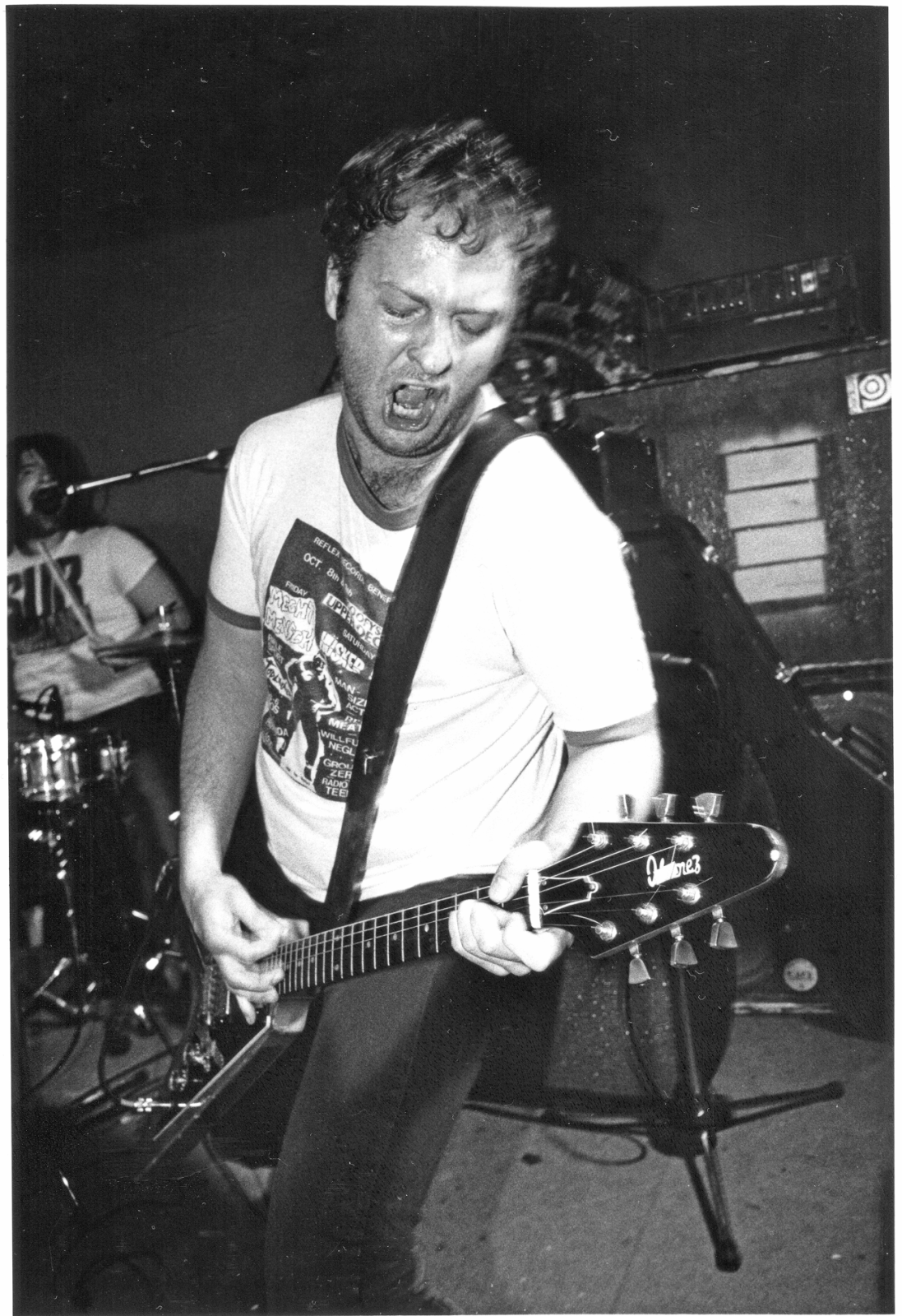
Immediately following the breakup of Husker Du, Mould’s transition to solo work began with 1989’s Workbook, which found him embracing the growing influence of Richard Thompson and experimenting with folk instrumentation and songwriting. One key shift that happened during this period, in addition to the shift towards more acoustic-based music, was the purchase of a 1987 Lake Placid Blue Fender Strat Plus with lace sensor pickups, a guitar that would become the great staple of his sound from that point through to the present day. The strat is perhaps more synonymous with Bob Mould than even the Ibanez Vs are. And it’s an instrument that would prove critical to maybe the most important era of his career: The Sugar years.
As the story goes, Sugar, comprised of Mould, bassist David Barbe and drummer Malcolm Travis, began as a band assembled to record what was supposed to be Mould’s third solo album after 1990’s Black Sheets of Rain, an album that found him returning to a more electric sound. The three musicians hadn’t played together before, and in fact Barbe and Travis hadn’t met before Mould recruited them. He had been inspired and activated by what Nirvana was doing and decided that he needed to create expansive, melodic, immediate guitar rock and what resulted was 1992’s landmark Copper Blue, the band’s debut on Creation Records, the label famous for housing bands like My Bloody Valentine and The Jesus and Mary Chain.
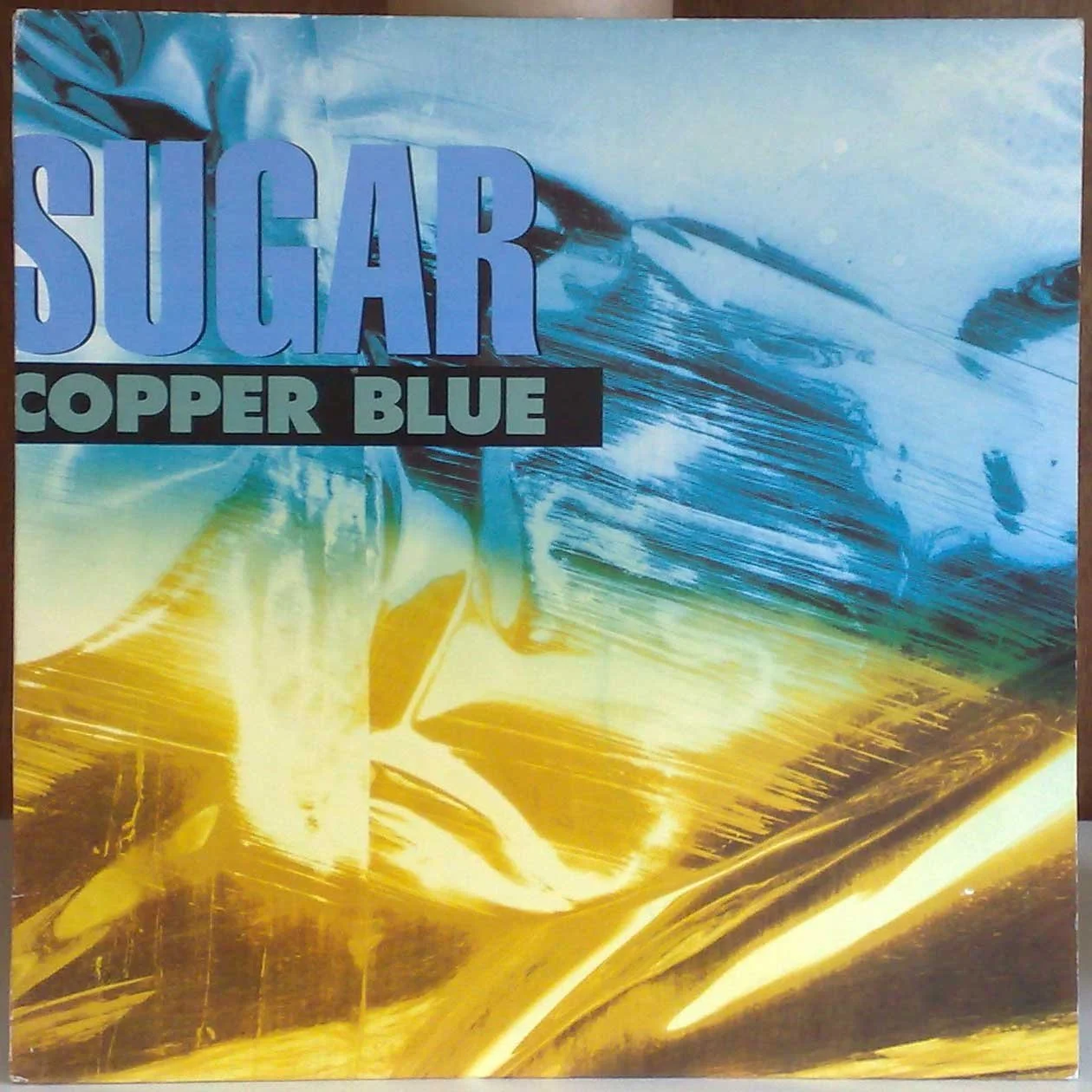
Copper Blue was powerful, urgent, and absolutely filled with hooks. It’s one of those records that feels influential as you’re listening to it. You can’t necessarily identify an artist to pull from its web of influence, but you know when you hear it just how monumental it is. Songs like “Helpless” and “Hoover Dam” would cement Mould as not just a unique guitar player and sonic sculptor, but also a writer of songs that held serious weight in the pantheon of great rock and roll outside of the scrappy confines of the more underground punk movement.
His setup for the Copper Blue sessions was notably layered, as Mould himself recalled in an interview around the album’s 20th anniversary in 2012.
“I remember my signal path because I still have it! [laughs] I plugged into a Roland SDE-1000 delay, and then I had an Eventide H3000 SE – I ran stuff from it in stereo and then I compressed it with a DBX 160S two-channel compressor. At that point, I had a left and a right signal, so I had a pair of stacks on each side, with each made up of a Roland JC120 solid-state head, a four by 12 Marshall cabinet and a four by 12 Sonic cab – both of those had Celestion speakers. Also, on each side of the stacks, I had a Fender Concert, a great tube amp with one 12-inch speaker.”
Copper Blue was hugely successful, putting Sugar in bigger rooms than Husker Du ever played and getting the band on major international festivals. It began a whirlwind period of touring and recording that would see the band release the EP Beaster in 1993, followed by the LP File Under Easy Listening the following year. They called it quits in 1995 after an intense period of activity, but in a few short years made as much of a mark on a subset of music culture as Husker Du had in the previous decade.
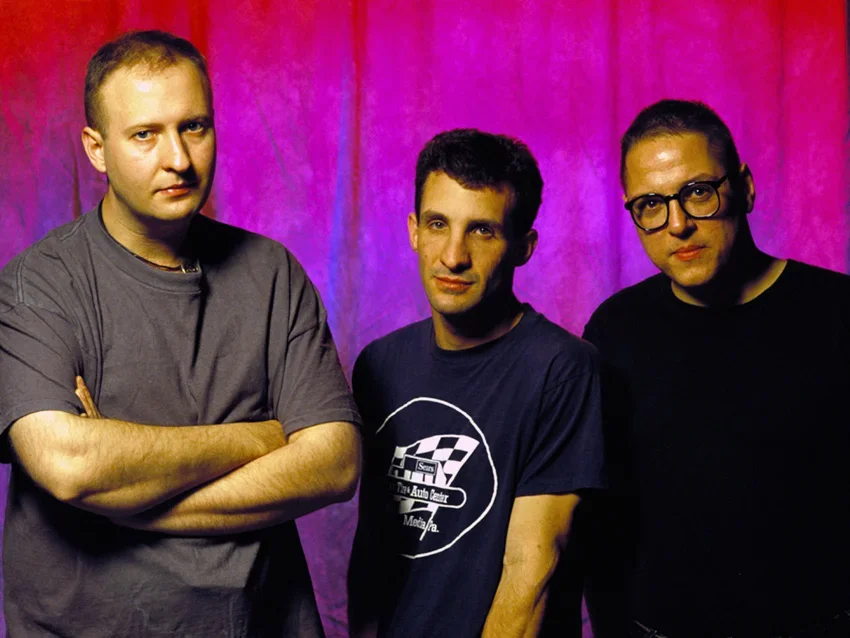
From Copper Blue on, including Sugar’s run followed by a return to solo albums, obviously not including an unexpected though equally brilliant turn into electronic music in the early 2000s, and the resurgence of his solo career in the last 15 years, Mould has been consistent sonically and in his songwriting, never losing the ferocity in his vocals and the high gain wall of sound that he’d always been known for.
What has grown over the decades is his influence on younger generations of players; guitar players like J Mascis of Dinosaur Jr are clear descendents of Mould’s playing and the sheer loudness of his sound. Black Francis of Pixies has also cited Mould as a major influence, and in turn Mould wrote Copper Blue’s “A Good Idea” as an ode to Pixies. And then there were bands like Nirvana, whose bassist Krist Novoselic said, “What Nirvana did was nothing new, Hüsker Dü did it before us.”
Following Grant Hart’s death in 2017, Green Day frontman Billie Joe Armstrong stated simply that his band would not exist had it not been for Husker Du. The template for the type of power trio that Mould created starting with Husker Du and refined through Sugar and his current solo outfit is one that certainly has been used by countless bands over the decades. Foo Fighters frontman Dave Grohl has been unabashed is his love of Mould’s work and the influence it had on his approach to songwriting and guitar playing, and guitarists like Joe Genaro of the Dead Milkmen continue to cite his impact.
And one major point of influence that’s worth noting here on the channel is My Bloody Valentine, and more specifically guitarist Kevin Shields. Shields has cited Mould numerous times as an influence, particularly in regard to his use of reverse reverb. He also called Mould one of his favorite players alongside Johnny Ramone, The Cramps’ Poison Ivy, and Ron Asheton from The Stooges.
In turn, Mould has raved about MBV’s Loveless, which he said was a massive influence on him after he first heard the album in 1991.
“I couldn't believe what I was hearing,” he said in an interview about his introduction to Loveless.
Simply stated, there is no one like Bob Mould. People talk about singular guitar players, and the list is certainly long of people who have carved out their own sounds and spaces in the art form. But to not put Mould on that list would be a crime. His pioneering sound and playing style focused on filling space with razor sharp gain and big open chords, helped usher in multiple eras of bands and players, and continues to have a ripple effect on guitar music to this day.